For the Next Generation
Learn it. Speak it. Carry it forward.
For students, families, educators, and diaspora visitors: every word learned is another thread kept unbroken.
View the complete poster archive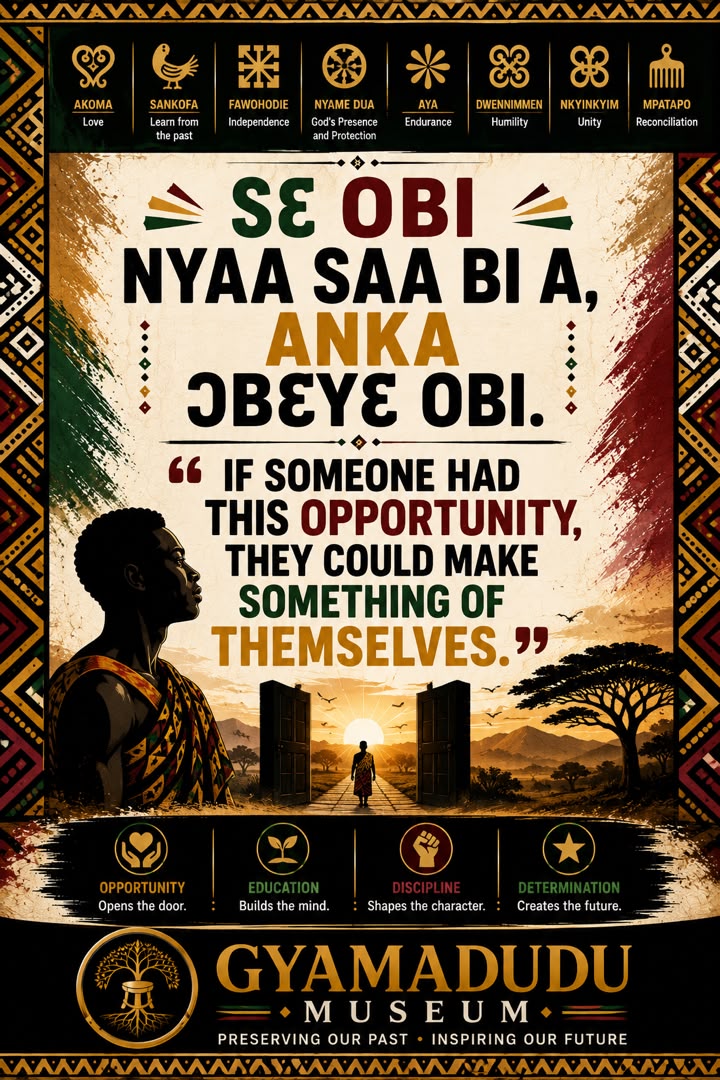
 GYAMADUDU MUSEUM
Kumasi · Ghana
GYAMADUDU MUSEUM
Kumasi · Ghana
Learn
Read the museum declaration, mission, and room interpretations in English and Akan (Twi).
Museum Learning Guide
Each tab opens one sacred room or statement, with clear text, paired images, and focused reading sections to prevent long page scrolling.
Poster Exhibition · 2026
Language is more than speech. It is a vessel for memory, identity, and the instructions a people leave for the future.
For the Next Generation
For students, families, educators, and diaspora visitors: every word learned is another thread kept unbroken.
View the complete poster archive
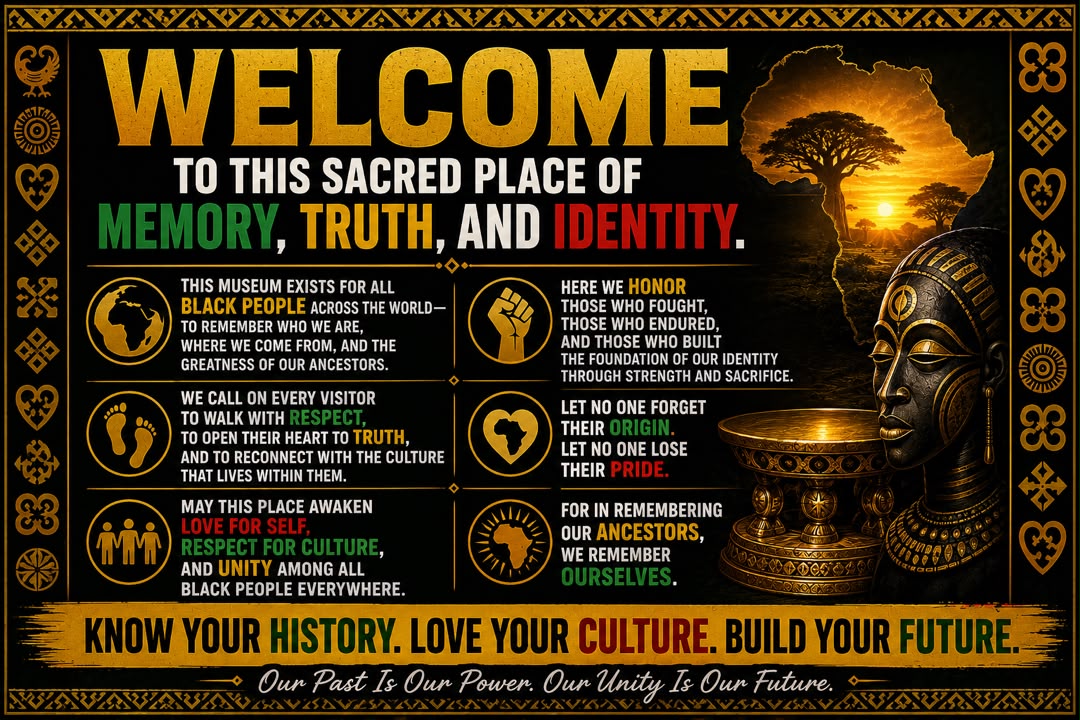
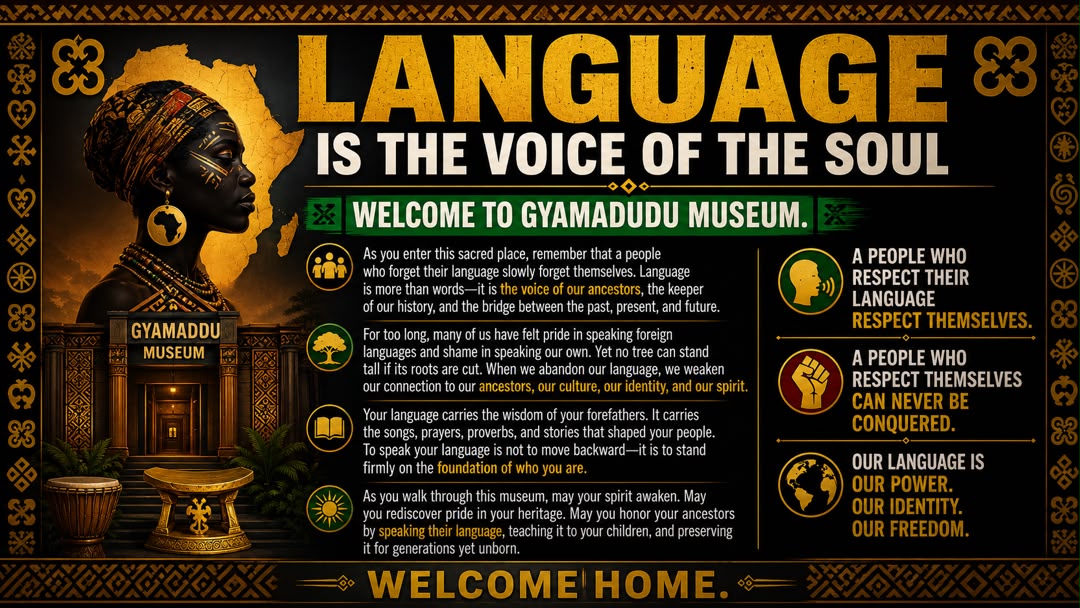
Museum Entrance Declaration
Welcome to this sacred place of memory, truth, and identity.
English
“Welcome to this sacred place of memory, truth, and identity.
This museum exists for all Black people across the world—
to remember who we are, where we come from, and the greatness of our ancestors.Here we honor those who fought, those who endured, and those who built the foundation of our identity through strength and sacrifice.
We call on every visitor to walk with respect, to open their heart to truth, and to reconnect with the culture that lives within them.
Let no one forget their origin. Let no one lose their pride.
May this place awaken love for self, respect for culture, and unity among all Black people everywhere.
For in remembering our ancestors, we remember ourselves.”**
Akan (Twi)
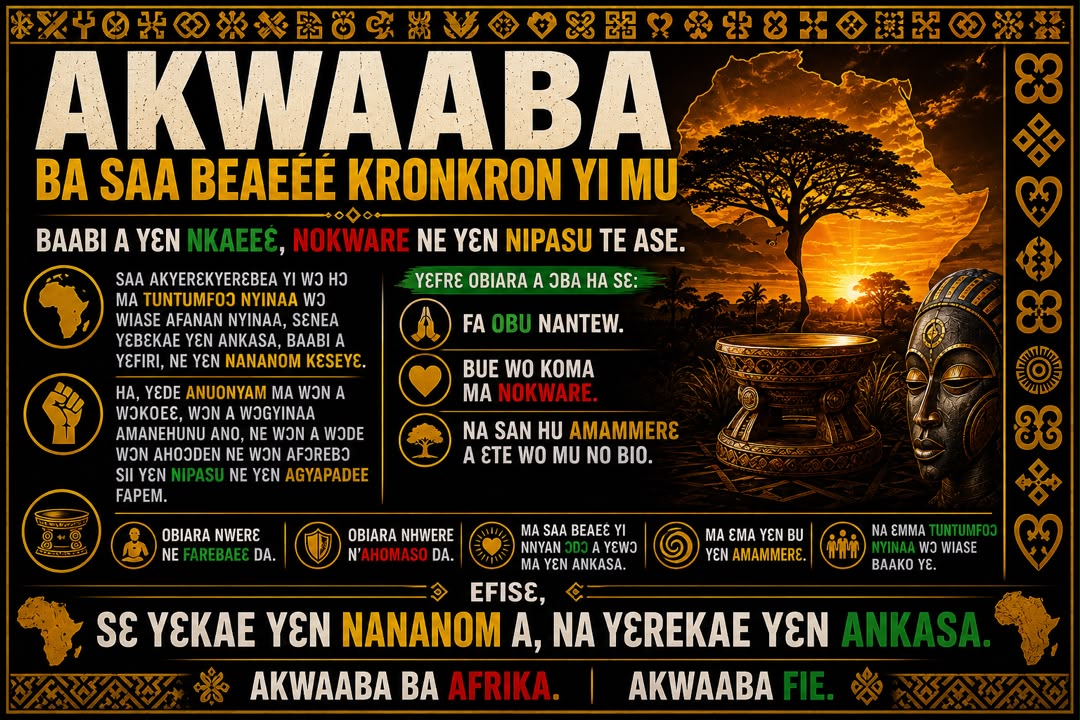
Akwaaba ba saa beaeɛ kronkron yi mu — baabi a yɛn nkaeɛ, nokware ne yɛn nipasu te ase.
Saa Akyerɛkyerɛbea yi wɔ hɔ ma Tuntumfoɔ nyinaa wɔ wiase afanan nyinaa, sɛnea yɛbɛkae yɛn ankasa, baabi a yɛfiri, ne yɛn nananom kɛseyɛ.
Ha, yɛde anuonyam ma wɔn a wɔkoeɛ, wɔn a wɔgyinaa amanehunu ano, ne wɔn a wɔde wɔn ahoɔden ne wɔn afɔrebɔ sii yɛn nipasu ne yɛn agyapadeɛ fapem.
Yɛfrɛ obiara a ɔba ha sɛ:
Fa obu nantew.
Bue wo koma ma nokware.
Na san hu amammerɛ a ɛte wo mu no bio.
Obiara nwerɛ ne farebaeɛ da.
Obiara nhwere n’ahomaso da.
Ma saa beaeɛ yi nnyan ɔdɔ a yɛwɔ ma yɛn ankasa.
Ma ɛma yɛn bu yɛn amammerɛ.
Na ɛmma Tuntumfoɔ nyinaa wɔ wiase baako yɛ.
Efisɛ,
Sɛ yɛkae yɛn nananom a, na yɛrekae yɛn ankasa.
Akwaaba ba Afrika.
Akwaaba fie.
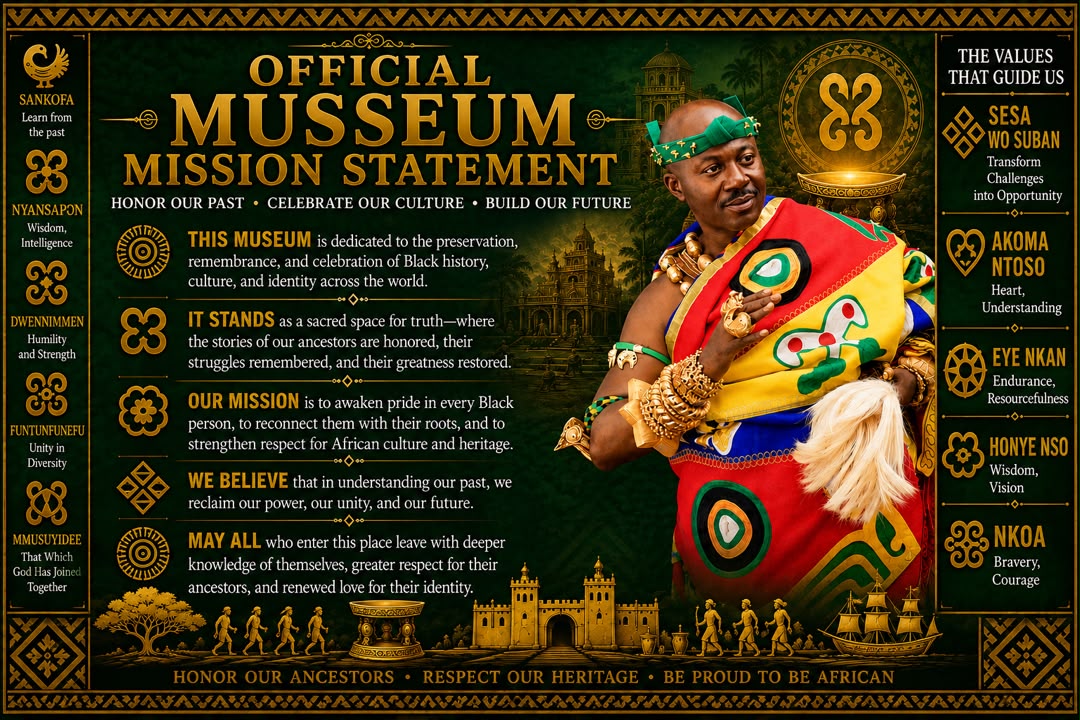
Official Museum Mission Statement
A sacred statement of preservation, remembrance, and identity.
English
**“This museum is dedicated to the preservation, remembrance, and celebration of Black history, culture, and identity across the world.
It stands as a sacred space for truth—where the stories of our ancestors are honored, their struggles remembered, and their greatness restored.
Our mission is to awaken pride in every Black person, to reconnect them with their roots, and to strengthen respect for African culture and heritage.
We believe that in understanding our past, we reclaim our power, our unity, and our future.
May all who enter this place leave with deeper knowledge of themselves, greater respect for their ancestors, and renewed love for their identity.”**
Akan (Twi)
(Official Museum Mission Statement)
Saa Akyerɛkyerɛbea yi si hɔ de bɛkora, akae, na adi Tuntumfoɔ abakɔsɛm, amammerɛ ne nipasu a ɛwɔ wiase nyinaa mu anuonyam.
Ɛyɛ beaeɛ kronkron a nokware te ase, baabi a yɛde obu ne anuonyam kae yɛn nananom, yɛkae wɔn amanehunu ne wɔn afɔrebɔ, na yɛsan de wɔn kɛseyɛ ne wɔn anuonyam ba anim bio.
Yɛn botaeɛ ne sɛ:
Yɛbɛma Tuntumni biara anya ahomaso wɔ ne ho.
Yɛbɛsan de no akɔ ne ntini ne ne farebaeɛ.
Na yɛbɛhyɛ obu a yɛde ma Afrika amammerɛ ne yɛn agyapadeɛ den.
Yɛgye di sɛ:
Sɛ yɛte yɛn atwam ase a, yɛsan nya yɛn ahoɔden.
Yɛsan nya yɛn baakoyɛ.
Na yɛsan si yɛn daakye wɔ fapem a ɛyɛ den so.
Yɛn nananom yɛ yɛn ntini.
Yɛn amammerɛ yɛ yɛn ahoɔden.
Yɛn nipasu yɛ yɛn agyapadeɛ.
Akwaaba ba Afrika.
Akwaaba fie.
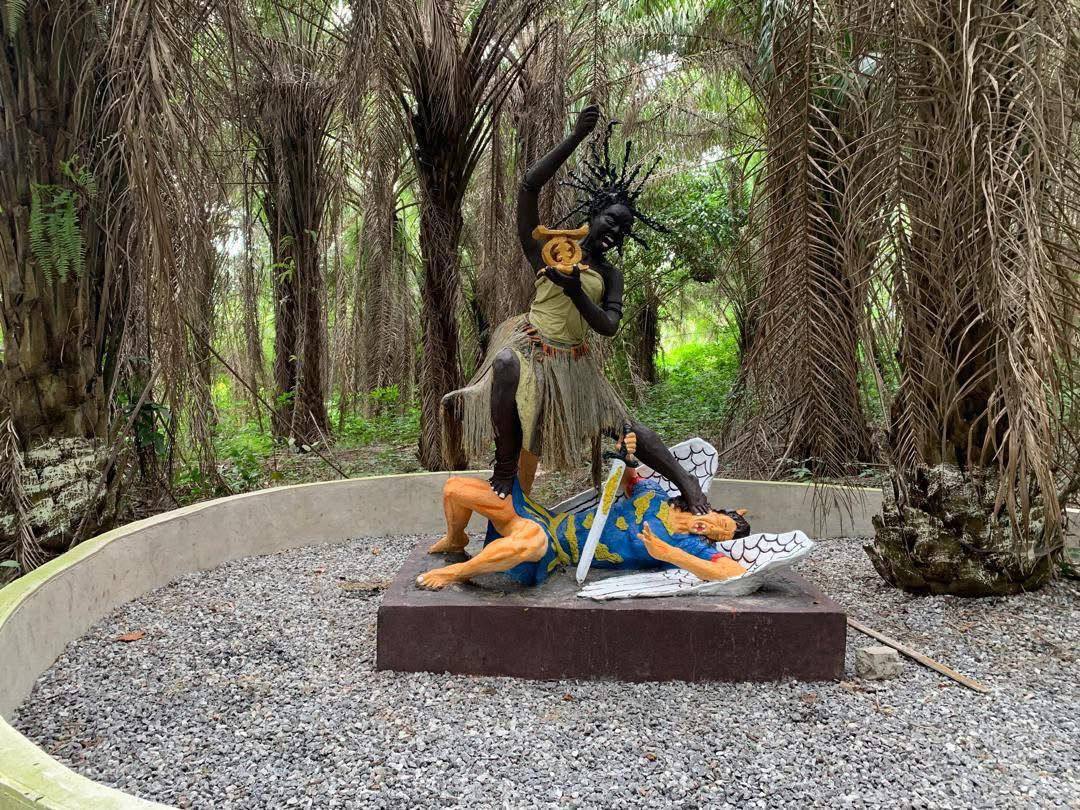
Room (2)
We rise, not to be above others, but to stand fully in our own light.
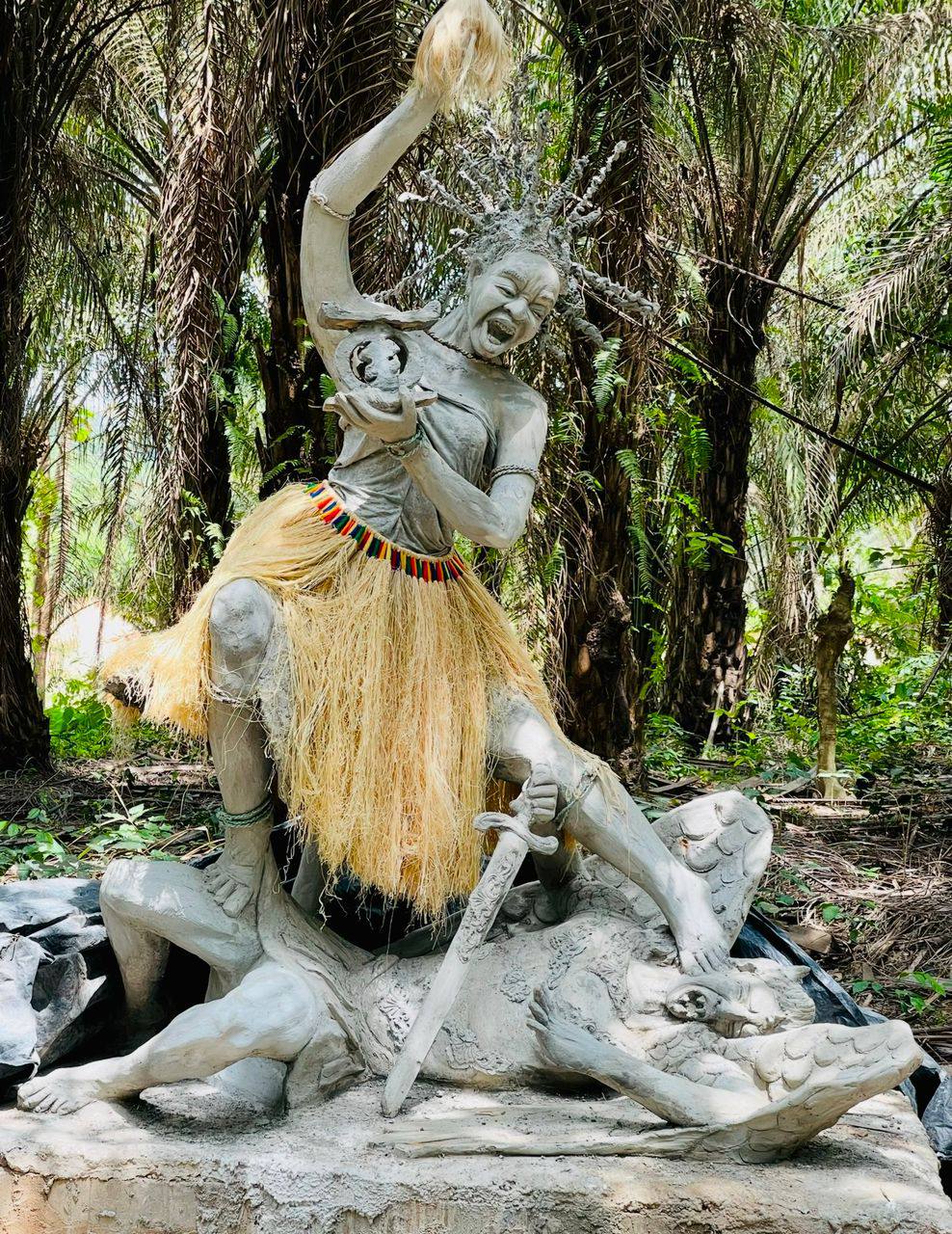
A celebration of dignity, strength, and restored identity.
This monument celebrates the rise, dignity, and unshakable strength of African identity.
It honors a history where African people were once suppressed, but never defeated — and a present where they rise with confidence, wisdom, and self-worth.
The African Queen stands as a symbol of renewed power, cultural pride, and restored identity. Beneath her is not a statement of domination, but a reminder that what was once weighed down can be transformed into strength and elevation.
This is the spirit of Africa:
A people who rise.
A people who rebuild.
A people who reclaim their voice in the world.
Rise in dignity.
Stand in truth.
Walk in pride.
Yɛsɔre.
Yɛnsɔre sɛ yɛbɛsen afoforo.
Yɛsɔre sɛ yɛbɛgyina yɛn ankasa hann mu.
Saa nkaedum yi di animuonyam, ahoɔden ne Afrika nipasu a wɔasan ama no animuonyam ho afahyɛ.
Afrika Hemaa no gyina ha sɛ agyiraehyɛdeɛ a ɛda ahoɔden foforɔ, amammerɛ ho ahomaso ne nipasu a wɔasan agye no bio adi.
Sɔre wɔ animuonyam mu.
Gyina nokware mu.
Nantew wɔ ahomaso mu.
Afrika bɛkɔ anim. Afrika bɛtena hɔ daa.
This sacred room is dedicated to the Akan women of courage — mothers, grandmothers, daughters, and guardians of the people.
Some are known to history.
Many are unknown to the world.
But all are known to the ancestors.
They are the women who protected families, preserved culture, resisted hardship, and carried their communities through times of struggle and change — both in the homeland and across the world.
They are not only part of history —
they are the foundation of it.
May their names be remembered.
May their spirits be honored.
And may their legacy continue in all who come after them.
Akwaaba ba saa beaeɛ kronkron yi mu.
Saa dan yi de anuonyam ma Akan mmea akokodurufoɔ — yɛn ɛnanom, yɛn nananom mmea, yɛn mma mmea, ne wɔn a wɔbɔɔ wɔn nkurɔfo ne wɔn abusua ho ban.
Ɛnam wɔn ahoɔden so na yɛn amammerɛ tenaa ase.
Ɛnam wɔn nyansa so na abusua nyaa ɔkwankyerɛ.
Ɛnam wɔn ɔdɔ so na awoɔ ntoatoasoɔ toaa so.
Di Akan Ɔbaa ni.
Di Yɛn Nananom ni.
Di Yɛn Amammerɛ ni.
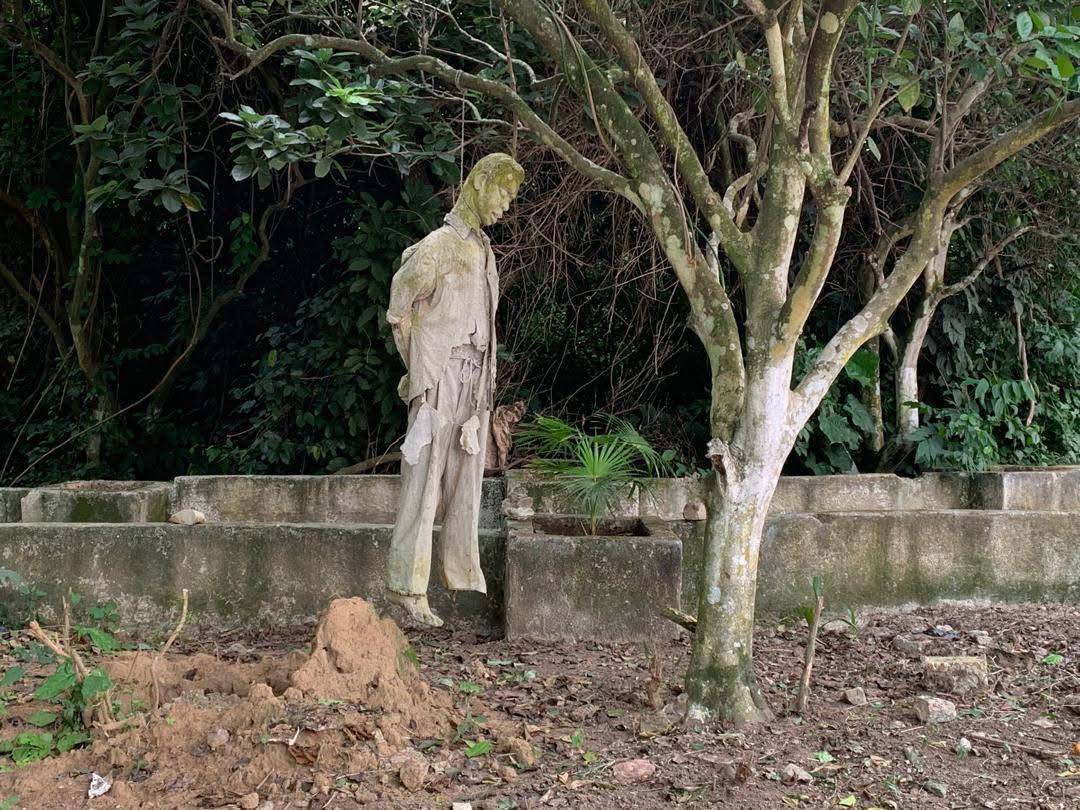
Room (3)
You are about to enter a sacred place of ancient memory.
You are about to enter a sacred place of ancient memory.
Within this chamber rest the preserved bodies of those who walked this earth long before us. Through time, their bodies have remained so that the living may remember the journey of humanity and the power of our ancestors.
These are not simply bodies.
They are witnesses of history.
As you enter this chamber, walk with respect.
Walk with humility.
And remember that one day we too will become ancestors.
Honor them.
Respect them.
Remember them.
“The body may sleep in silence, but the spirit of the ancestors continues to speak through time.”
(THE CHAMBER OF ETERNAL ANCESTORS)
Worebɛhyɛn beaeɛ kronkron bi a ɛkura tete nkaeɛ ne yɛn nananom agyapadeɛ.
Saa dan yi mu na yɛn nananom a wɔtenaa asase yi so ansa na yɛreba no nipadua a wɔakora so da.
Eyinom nyɛ nipadua kɛkɛ.
Wɔyɛ yɛn abakɔsɛm adansefoɔ.
Fa obu hyɛn mu.
Fa ahobrɛaseɛ hyɛn mu.
Na kae sɛ:
Da bi yɛn nso bɛyɛ yɛn nananom.
Yɛn nananom nnyera da.
Wɔte ase wɔ yɛn nkaeɛ mu.
Na wɔn honhom da so ne yɛn nantew.
Akwaaba.
“Ɛwom sɛ nipadua no da kommyɛ mu deɛ, nanso yɛn nananom honhom da so kasa fa bere ne awoɔ ntoatoasoɔ nyinaa so.”
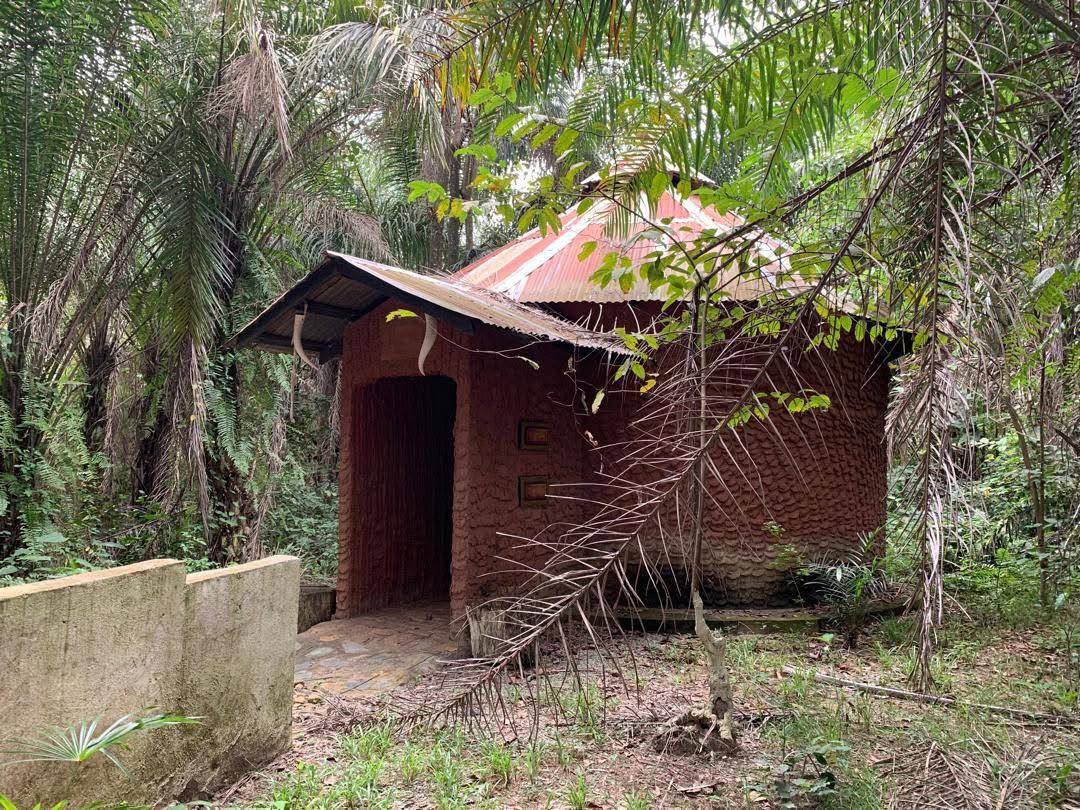
Room (4)
( “The Chamber of Priests, Priestesses, and Royal Women.”)
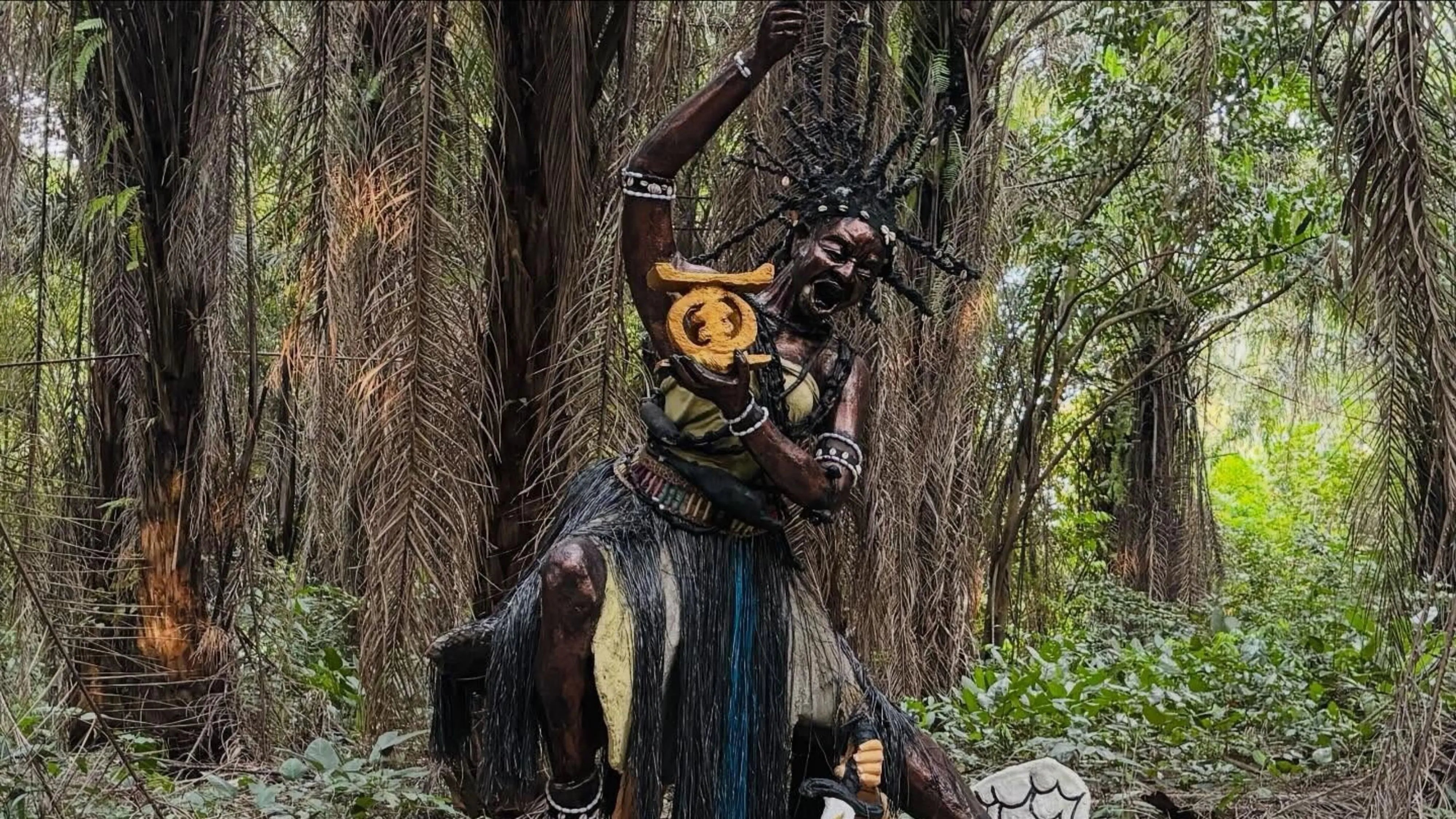
This is a sacred space dedicated to the spiritual guides and royal daughters of our land.
Here we honor the priests and priestesses, who stood between the people and the unseen world. They carried wisdom, offered guidance, healed the sick, and kept the connection between humanity, the ancestors, and the spirit of the land.
We also honor the princesses and royal women, who carried the strength of leadership, preserved tradition, protected cultural values, and stood as pillars of dignity within their kingdoms.
This room exists to restore their voice in history.
For too long, their stories were not told.
Here, they are remembered with honor.
Akwaaba ba saa beaeɛ kronkron yi mu.
Saa dan yi yɛ beaeɛ kronkron a yɛde ahyɛ yɛn asɔfo, asɔfoɔ mmea, ne ahemma a wɔsom wɔn man ne wɔn nkurɔfo anuonyam.
Nanso ha, yɛde obu ne anuonyam kae wɔn.
Ma wɔn nyansa nkyerɛ awoɔ ntoatoaso a ɛreba kwan.
Na wɔn agyapadeɛ ntena hɔ daa.
This monument honors the Traditional Priestess — a custodian of spiritual wisdom, ancestral connection, and the sacred laws of the land.
She stands as a symbol of African spiritual power, knowledge, and divine responsibility, carrying the Golden Stool as a representation of unity, leadership, and the soul of the people.
African spiritual tradition endures.
It does not disappear.
It transforms, protects, and remains unbroken.
Saa nkaedum yi de anuonyam ma Ɔkomfoɔ Baa — ɔhwɛfoɔ a ɔkora honhom mu nyansa, abusuabɔ a ɛda yɛn ne yɛn nananom ntam, ne kronkron mmara a ɛbɔ asaase yi ho ban.
Afrika honhom mu amammerɛ da so te ase.
Ɛnyera da.
Ɛsakra bere mu, ɛbɔ ne nkurɔfo ho ban, na ɛgyina pintinn daa.
Di yɛn nananom ni.
Di yɛn honhom ni.
Di yɛn amammerɛ ni.
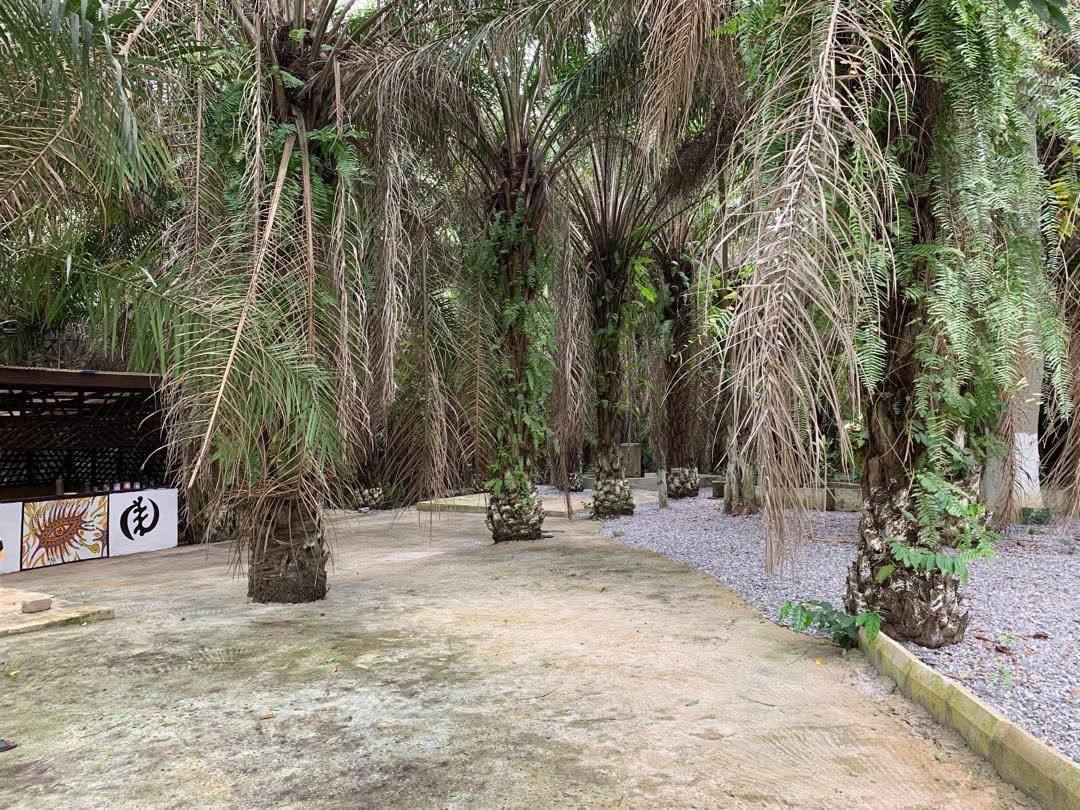
Room (5)
This is a sacred space where we honor the strength of our people through their family clans.
This is a sacred space where we honor the strength of our people through their family clans.
Each clan carries a unique story, a lineage of ancestors, and a bond that connects generations past, present, and future. Together, these clans form the foundation of our society — built on unity, identity, and shared heritage.
These statues stand as a reminder that no one stands alone.
We are born from a people, guided by ancestors, and carried by family.
To know your clan is to know your roots.
To honor your clan is to honor your ancestors.
To preserve your clan is to preserve your identity.
Akwaaba ba saa beaeɛ kronkron yi mu.
Ha na yɛde obu ne anuonyam ma yɛn nkurɔfo ahoɔden a ɛnam wɔn abusua ahorow so.
Sɛ wunim wo abusua a, wunim wo ntini.
Sɛ wodi wo abusua ni a, wodi wo nananom ni.
Sɛ wokora wo abusua so a, wokora wo nipasu so.
Abusua yɛ ahoɔden.
Nananom yɛ yɛn ntini.
Nipasu yɛ yɛn agyapadeɛ.
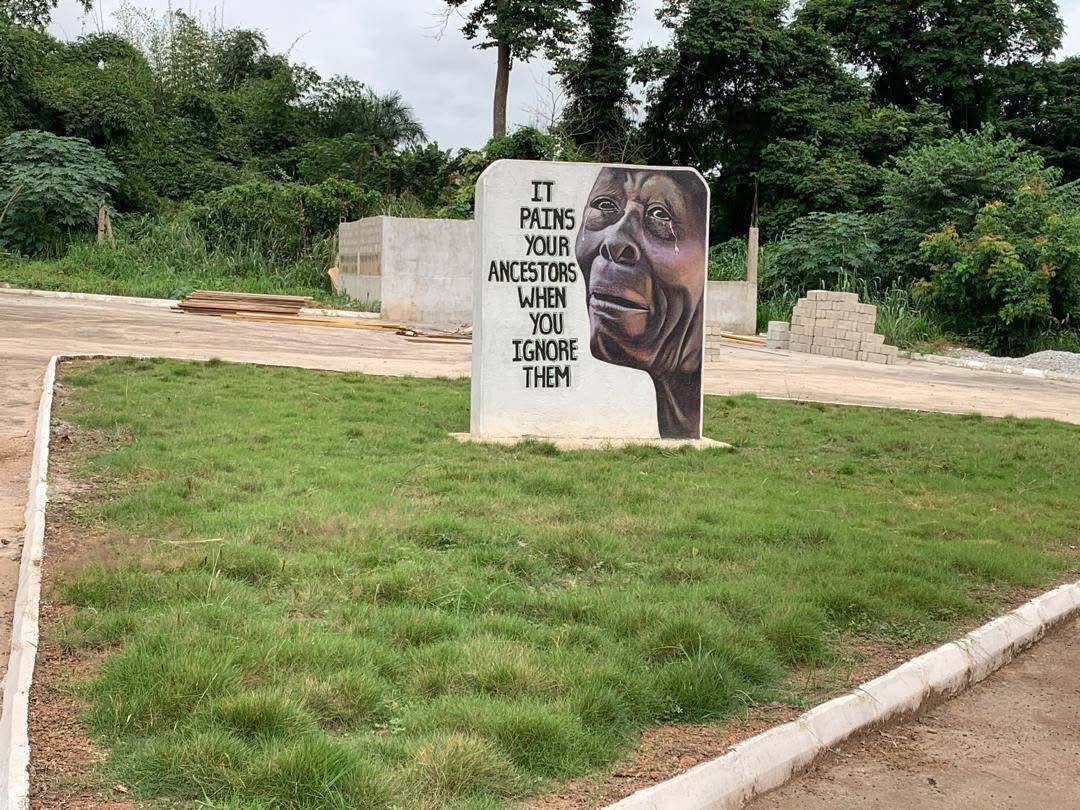
Room (5)
(The Hall of Family Clans)
Inside the hall, each clan could display its totem (akyinie) and a short description. For example:
“To know your clan is to know your roots.”
- “Sɛ wunim wo abusua a, wunim wo ntini.”
Room (6)
Here we honor our departed Kings in the sacred tradition of laying in state.
Here we honor our departed Kings in the sacred tradition of laying in state.
They are dressed in gold and Kente cloth, symbols of dignity, royalty, and eternal honor. For we believe they are not gone, but have journeyed on to meet their great-great grandmothers and ancestors.
In this way, death is not an end — it is a return to the ancestors, where the spirit continues its life beyond the earth.
Rest is not loss. It is continuation.
Honor is not forgotten. It is eternal.
Ha na yɛde obu ne anuonyam kae yɛn Ahenfoɔ a wɔawie wɔn asase so akwantuo, sɛnea yɛn amammerɛ kronkron kyerɛ wɔ da wɔn anim mu.
Wɔhyɛ Sika ne Kente, a ɛyɛ ahennie, animuonyam ne anuonyam a ɛnsa da ho sɛnkyerɛnne.
Yɛgye di sɛ wɔanyera.
Wɔatu kwan akɔhyia wɔn nananom ne wɔn agyanom a wɔadi wɔn anim kan.
Enti, owuo nyɛ awieeɛ.
Ɛyɛ sankɔfa — ɔkra no sane kɔ ne nananom nkyɛn, baabi a ne nkwa toaa so daa.
Fa obu gyina ha.
Kae wɔn afɔrebɔ.
Na ma wɔn nkaeɛ ntena ase daa.